
Diaspora Shorts welcomes you to our inaugural festival, “Voices, Rights, Freedoms – 2026”.
No longer defined by the labels of asylum seeker, refugee, or immigrant, we, the organisers of this first edition of the film festival, affirm our equal status as inalienably creative human citizens of a diasporic world on fire along all its borders, at every checkpoint and every port of entry.
Europe is a fortress: this affects the voices, rights, and freedom of those most vulnerable to state violence and ethnic or religious persecution ‘over there’. Mobilising the themes of “Voices, Rights, Freedoms” beyond mere metaphors of the inclusion of the “Other”, and into the creative practices of diasporic and women filmmakers, this six-day festival brings together films that will explore the limits and possibilities of human rights, feminist narratives of the struggle for women’s rights, the nomadic routes of migration, and diasporic cinema’s unique take on freedom of speech. As voices are erased in Gaza, Sudan, Iran, Ethiopia, Cuba, Kashmir, Lebanon and other warzones around the world, and as rights and freedoms are assailed on all sides from the fascist creep in Europe, America and parts of the global south, this festival will bring together filmmakers, asylum-citizens, artists, activists, and local communities for a dynamic program of screenings, workshops, discussions, and cultural exchange.
Welcome!
This Diasporic Film Festival is built on collaboration, inclusion, and storytelling and is composed through curated Film Screenings in which a diverse selection of short films will explore the lived experiences of displacement, identity, resilience, and the pursuit of freedom. Two of the founding organisers of Diaspora Shorts, Murshida and Reasat, directly express our collective hope and invitation: “We hope the festival becomes a space for dialogue, reflection, and connection. More than just screenings, it is envisioned as a platform where stories around diaspora, freedom of speech, feminism, and the right to voice can meet and resonate across cultures. We want it to create an environment where people feel seen, heard, and connected through shared and diverse experiences.”
Who is this invitation for?
Everyone! And we extend a special invitation to those who may not usually engage with these topics of freedom of expression, women’s rights, and human rights. We hope that diverse audiences can engage with these themes and these films. We invite local communities, artists, activists, students, and people from different diasporic, cultural, and religious backgrounds to come out, get together, and support the First Diaspora Shorts. As Murshida and Reasat envision: “The festival is about bridging experiences and opening conversations across differences.”
Download full programme HERE
A week of films, movement, discussion, and community. Free entry. All welcome.
📍
Asylcenter Ranum, Idrætsvej 10 (aktivtetscenter/fodboldbanen)
9681 Ranum, Denmark,
📅 15–20 June 2026
Screening & Event Programme
Monday 15th June - Diaspora Shorts Opening Night
20:30 Opening Speech by Murshida Zaman & Reasat Jyoti
21:00 - Screening 1
Traffic Art Film (2026) – Denmark
Director: Reasat Jyoti in collaboration with children from Ranum Asylum Center
Duration: 12 min 46 sec
Age Rating: U (Family Friendly)
Language: Bangla, Turkish, Arabic, English, Danish
Theme: Community Arts, Children's Voices, Homegrown Talent from the Diaspora
![]()
Synopsis:
Traffic Art is a cross-generational short film exploring the creation of a vibrant community artwork on the basketball court at Ranum Asylum Centre. Conceived by renowned artist RA Kajol and developed in collaboration with local residents, the project transformed a familiar public space into a living canvas of colour, shape, movement, and collective imagination..
Narrated by the project's younger co-creators, the film invites audiences into their imaginative world through the patterns, colours, and processes that shaped the artwork. Their voices offer a unique perspective on the project, highlighting the role of young people as active contributors to the reimagining of their local environment.
More than a record of an artistic intervention, Traffic Art is a story of people, participation, and the power of visual language to connect communities. Supported by Lim Collective and Vesthimmerland Asyl and funded by Augustinus Fonden, the project celebrates cultural dialogue, artistic freedom, and the transformative potential of community-led public art.
Director Bio:
Reasat Jyoti is a photographer, filmmaker, film critic, author, and visual storyteller whose practice explores the intersections of storytelling, travel, and visual art. His multidisciplinary work spans photography, cinema, literature, and performance, often engaging with themes of resilience, identity, migration, and human experience.
His film works include Repercuss (2024), where he worked as actor and director, Rhythms of Resilience (2024) as co-director, Laila (2020) as actor, and Beyond the Shore (2018) as producer. Jyoti studied photo composition and graphic design, shaping a visual language that blends cinematic storytelling with artistic composition.
In addition to filmmaking and photography, he has also performed in short films and is a published poet and essayist. His writings have appeared in platforms such as Shampratik Deshkal, reflecting his engagement with contemporary literature, culture, and social discourse.
21:30 - Screening 2
Ogomopare ~ Beyond the Shore (2026)— Bangladesh
Director: Murshida Zaman
Duration: 31 min 18 sec
Age Rating: 13+
Language: Bangla with English subtitles
Themes: Feminism, Desire, Emotional Freedom, Human Connection
![]()
Rebati, a 26-year-old independent journalist, moves through the rhythms of city life, balancing work, personal freedom, and an emotionally layered relationship with her mother. Her world shifts when she meets Najeeb Tarek, a 45-year-old reclusive painter whose quiet presence and artistic solitude awaken unexpected feelings within her.
As Rebati becomes increasingly drawn to Tarek's studio and inner world, their connection deepens through conversations about art, music, and longing. Blurring the boundaries between reality and imagination, the film explores desire, emotional vulnerability, and the search for intimacy beyond social expectations. Through symbolic imagery and poetic visual language, the story becomes a meditation on love, loneliness, and the transformative power of human connection.
Director Bio — Murshida Zaman is a Bangladeshi filmmaker, poet, and writer whose work explores women's rights, gender violence, censorship, exile, and social resistance through poetic and experimental storytelling. With a background in Bengali Literature from Eden Mohila College, National University of Bangladesh, she brings a strong literary voice to her films. Her debut feature, The Mattress (Toshok) (2020), was screened at international festivals including the Dhaka International Film Festival, the Nepal Human Rights Film Festival, and the Rainbow International Film Festival in London. In 2026, she released Ogomopare ~ Beyond the Shore, a feminist film exploring desire, intimacy, freedom, and emotional connection beyond social expectations. She later co-directed Repercuss (2024) and Rhythms of Resilience (2024) with Reasat Jyoti, focusing on exile, displacement, and asylum experiences. Murshida completed an ICORN residency in Copenhagen, Denmark (2021–2024), where she continued developing interdisciplinary projects connecting literature, film, and human rights.
22:00 -
Screening 3
Laila (2024) —Bangladesh
Director: Baishaki Samadder
Duration: 8 min 21 sec
Age Rating: 13+
Language: Bangla with English subtitles
Themes: Patriarchal Misogyny, Women's Rights, Freedom, Resilience
![]()
Laila is a woman trapped within the boundaries of a conservative family, where her life revolves around caring for her children and fulfilling the expectations of her husband's household. Despite her endless sacrifices, she remains deprived of personal freedom, identity, and the right to choose her own path. Through Laila's emotional journey, the film explores the silent struggles of women living under patriarchal restrictions, portraying a powerful story of resilience, dignity, and the longing for freedom.
Director Bio — Baishaki Samadder studied drama at Santiniketan and has performed in numerous theatre productions. Alongside her work as an actor, she has played a leading organisational role in the Dhaka International Film Festival. Laila marks her directorial debut and reflects her commitment to exploring women's lives, freedom, and social realities through cinema.
22:10- Screening 4
AACHULEY... The Divine Whispers (2025) India
Director: Rohitaswa Mukherjee
Duration: 23 min 57 sec
Age Rating: 13+
Language: Bangla (India) and Lepcha with English subtitles
Themes: Indigenous Knowledge, Cultural Survival, Spirituality, Environment
![]()
A poetic documentary following Dupden Lepcha, an elder from the remote Himalayan village of Tingvong, whose recurring dreams lead him on a spiritual journey into the sacred mountains of Northeast India. Guided by ancestral wisdom, Dupden confronts memory, loss, and the fragile future of Lepcha culture while carrying a sacred offering intended to heal both himself and the land. Blending myth, spirituality, and environmental consciousness, the film is an intimate meditation on cultural survival and humanity's deep connection with nature.
Director Bio — Rohitaswa Mukherjee is a filmmaker and educator based in Kolkata, India. An alumnus of Rabindra Bharati University and the Satyajit Ray Film and Television Institute (SRFTI), his work spans documentaries, short films, and fiction features. A recipient of the National Award for Best Script, his films have been recognised at major Indian and international festivals. His practice combines socially engaged storytelling, experimentation, and collaborations with regional communities. He currently serves as an Assistant Professor at SRFTI, mentoring emerging filmmakers in visual storytelling, script development, and cultural cinema.
Tuesday 16th June
Memory is never just the past — it is the weight the present carries. Tonight, artists Katrine Dirckinck-Holmfeld and Amr Hatem offer us two films made from the same community, separated by years of grief, solidarity, and world events that have changed everything and nothing. Zamakan and Zamakannan are not simply documents — they are acts of witnessing, of holding space for lives shaped by displacement, war, and the quiet persistence of belonging. As voices are being erased across Gaza, Sudan, Lebanon and beyond, these films insist: we were here, we are here, we remember. Pull up a chair and stay close.
21:00 — Introduction to Films by Katrine Dirckinck-Holmfeld & Amr Hatem
21:30 — Screening 1:
1
Zamakan (TimeSpace) (2019) — Denmark
Directors: Katrine Dirckinck-Holmfeld & Amr Hatem
Duration: 30 min | Age Rating: 13+
Language: Arabic with English subtitles
Themes: Diaspora, Migration, Collective Memory, Belonging
A long-term video project exploring memory, displacement, and coexistence through the idea of the "contrapuntal image", where multiple times and spaces unfold within a single visual landscape. Set within the community of Sorte Firkant and connected to Palestine, the film reflects on belonging, migration, diaspora, and collective memory.
22:00 - Screening 2:
Zamakannan (TimeSpace2) (2026) Denmark
Directors: Katrine Dirckinck-Holmfeld & Amr Hatem
Duration: 31 min
Age Rating: 13+
Language: Arabic with English subtitles
Themes: Diaspora, Migration, Collective Memory, Belonging
A poetic and intimate portrait of the community surrounding Sorte Firkant, capturing everyday life, relationships, and the emotional aftermath of global and local violence since the filming of Zamakan in 2018. The film reflects on how war, memory, and political trauma become inscribed into daily life, shared spaces, and collective experience.
Director Bios
Katrine Dirckinck-Holmfeld, PhD is a visual artist, independent researcher, and educator. Her work explores reparative praxis as collaborative audio-visual practices that engage with the debris of broken histories. Current artistic work and research traverse entangled colonial archives between the United States Virgin Islands, Ghana, Greenland, India, and Denmark. She is co-founder of the artistic research network Reparative Encounters and of the cultural venue Sorte Firkant in Copenhagen.
Amr Hatem is a visual artist based in Copenhagen. His artistic practice revolves around storytelling, disappearance, memory, archives, gestures, choreographies, and affects shaped by experiences of displacement. He is interested in dynamics of remembrance and forgetting, and in particular how archival materials tell and also hide stories, and how bodies also remember through gestures and movements. He holds a Bachelor in Fine Arts from the Faculty of Fine Arts, Damascus University (2010), attended the Maumaus Independent Study Program in Lisbon (2019), and holds an MFA from The Royal Danish Academy of Fine Arts, The School of Conceptual and Contextual Practices (2020).
Wednesday 17th June
Resting Day — No Screenings
No screenings tonight — and that is intentional. Rest, too, is an act of resistance in a world that demands constant productivity and endurance from those who already carry the most. Take the evening. Breathe. Talk to someone new. Let the films from the past two nights settle somewhere in your body. We will be back together tomorrow.
Thursday 18th June
What are the stories a society tells itself to hold together — and who pays the price for them? Tonight's programme turns a searching eye on the architecture of social life: the codes of honour, the weight of nationalism, the gendered rules that go unquestioned until someone dares to question them. Director Akın Güngör's Tunnel was born from philosophical doubt, and it asks us to sit with our own — about the values we inherit, the certainties we perform, and the silences that hold them in place. Diaspora Shorts was built on the belief that freedom of speech is not a given; it is a practice. Tonight is part of that practice.
21:00 — Introduction to Film
21:30 - screening 1
Tunnel (2021) Turkey
Director: Akın Güngör
Duration: 26 min 28 sec
Age Rating: 13+
Language: Turkish and English
Themes: Social Hypocrisy, Nationalism, Honour, Gender
![]()
Developed in response to David Hume's philosophy of doubt, Tunnel explores social hypocrisy through the lens of family, honour, nationalism, and gender. Combining two spoken languages, parallel timelines, video art, fluid camerawork, and experimental editing techniques, the film examines uncertainty, perception, and the values that shape social life.
Director Bio — Akın Güngör was born in İzmir, Turkey, in 1983 and graduated from the Faculty of Fine Arts, Department of Cinema and Television, at Dokuz Eylül University. Since beginning his career in 2005 as an Assistant Director, he has worked extensively across Turkish film and television. He was among the founders of the Cinema TV Trade Union in 2014 and later became a founding member of the Directors' Association of Turkey in 2019. Since 2020, he has worked as a director in Turkish cinema and television.
Friday 19th June
Family Movement Workshop & Film
Before the film, there is the body. Tonight opens with a Capoeira workshop led by Sandro Masai — an invitation to move, to play, and to remember that art lives in us before it lives on screen. When we gather afterwards to watch Rhythms of Resilience, you will already know something the film is trying to say: that movement is a language, that community can be built in unexpected places, and that joy is a form of resistance. All ages, all bodies, all welcome.
![]()
20:30 — Capoeira Workshop with Sandro Masai
21:30 — Film Introduction with Reasat Jyoti, Murshida Zaman & Sandro Masai
22:00 — Screening
Rhythms of Resilience (2024) Denmark
Directors: Murshida Zaman & Reasat Jyoti
Duration: 10 min 29 sec
Age Rating: U (Family Friendly)
Language: Brazilian Portuguese, Bangla, Ukrainian, Urdu & English
Themes: Community Arts, Displacement, Asylum, Resilience
![]()
Rhythms of Resilience is a community documentary filmed at Holstebro Asylum Centre in Denmark. Over twelve months, the film follows performance artist Sandro Masai's participatory project Movement X, developed in collaboration with asylum seekers living at the centre. Against the backdrop of prolonged waiting and uncertainty, movement becomes a tool for connection, expression, and collective agency. Through Capoeira and embodied practice, participants transform spaces of displacement into moments of presence, solidarity, and belonging.
The film offers a poetic yet grounded reflection on how participatory art can challenge isolation and create new possibilities for community within the realities of asylum life. Supported by Lim Collective, Vesthimmerland Asyl and The Danish Arts Council, the project celebrates cultural dialogue, artistic freedom, and the transformative potential of community-led public art.
Director Bio
Murshida Zaman is a filmmaker, curator, and cultural producer based in Denmark. Her work focuses on migration, community engagement, and intercultural dialogue, often through collaborative and participatory artistic projects.
Reasat Jyoti is a filmmaker, photographer, and visual artist from Bangladesh based in Denmark. Working across documentary film and visual storytelling, his practice explores identity, displacement, memory, and social transformation.
Sandro Masai is a performance artist working with butoh, durational performance, and participatory art. He has exhibited and performed at venues including Den Frie Udstillingsbygning, ARoS, Trapholt, Kunsten, and Kunsthal NORD. He holds an MA in Design from Design School Kolding and a BA in Art and Technology from Aalborg University.
Saturday 20th June - Closing Night
![]()
Tonight's closing programme is presented in solidarity with Refugee Week — the world's largest arts and culture festival celebrating the contributions, creativity and resilience of refugees and people seeking sanctuary, running this year from 15–21 June. The 2026 theme is Courage — and courage, as Refugee Week reminds us, isn't always loud or bold. It can be found in simple acts: opening your door to a neighbour, watching a film that changes your view of the world, or simply having the courage to be yourself.
We are honoured to be able to show films from the Refugee Week Film Festival curated by
Ornella Mutoni, filmmaker and producer at Counterpoints Arts.
The four films we screen tonight embody exactly that: polar bears navigating foreign ice, a mother threading cultural memory through the chaos of a new country, two elderly people asking whether it is ever too late to begin again, and three generations of Palestinian exile held alive in home recordings and laughter. These are stories of loss — and also of stubborn, tender, furious love. Refugee Week 2026 also marks 75 years since the 1951 Refugee Convention — the landmark legal agreement affirming that those forced to flee deserve protection, dignity, and hope. Follow Refugee Week here.
21:30 — Screening 1
MIGRANTS (2020)
Directors: Hugo Caby, Antoine Dupriez, Aubin Kubiak, Lucas Lermytte & Zoé Devise
Duration: 8 min
Age Rating: U (Family Friendly)
Language: No dialogue
Themes: Migration, Belonging, Survival
![]()
Driven from their habitat by climate change, two polar bears embark on a journey into unfamiliar territory, where they encounter brown bears and must attempt to coexist.
21:40 — Screening 2
HAYAT (2019)
Director: Rendah Haj
Duration: 14 min | Age Rating: U (Family Friendly)
Language: Arabic and English
Themes: Refugees, Childhood, Hope
![]()
Rahma, an Eritrean migrant living in Australia, faces isolation and daily struggles as she works to keep her four young children connected to their cultural roots while building a new life far from home.
22:00 — Screening 3
TSKALTUBO (2023)
Director: Toby Andris
Duration: 24 min | Age Rating: U (Family Friendly)
Language: Georgian with English subtitles
Themes: Family, Migration, Identity
![]()
After 30 years living as refugees in an abandoned sanatorium, Irakli and Nana are finally offered a new apartment. But as the possibility of change arrives, they must confront whether it is too late to begin again.
22:30 — Screening 4
A WORLD NOT OURS (2014)
Director: Mahdi Fleifel
Duration: 1 hr 33 min | Age Rating: PG (Parental Guidance Advised)
Language: Arabic and English
Themes: Palestinian Exile, Memory, Displacement
![]()
A World Not Ours is an intimate and often humorous portrait of three generations of exile in the refugee camp of Ein el-Helweh in southern Lebanon. Drawing on a wealth of personal recordings, family archives, and historical footage, the film offers a sensitive and illuminating study of belonging, friendship, and family. Filmed over more than 20 years by multiple generations of the same family, the film becomes more than a portrait — it is an act of preservation, capturing what risks being forgotten and marking what should not be erased from collective memory.
As Diaspora Shorts comes to a close, we carry that hope forward. Thank you for being here. Thank you for being part of this.
Diaspora Shorts is a part of the lím collective’s annual programme in the North of Jutland. As an artist-run platform based in Aalborg and focused on socially engaged practices, the lim collective develops projects across public and community contexts supporting artistic work that unfolds through collaboration, participation, and long-term engagement. Text and curation by Amit Rai, graphic design by Ilichna Morasky, social media by Roj Kart, and production support by Alex Jönsson. Diaspora Shorts is kindly supported by Augustinus Foundation.

Bari-Bari
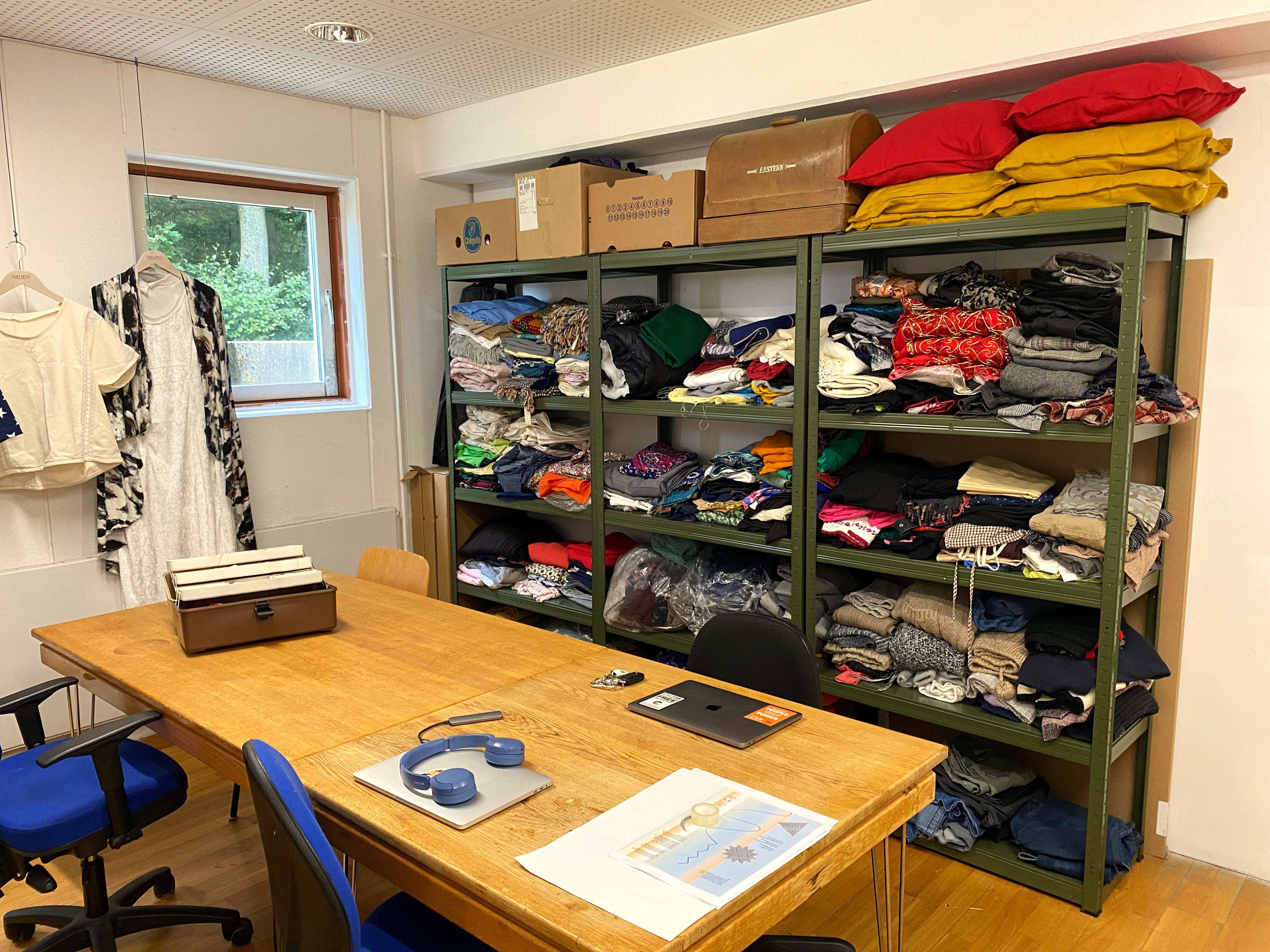
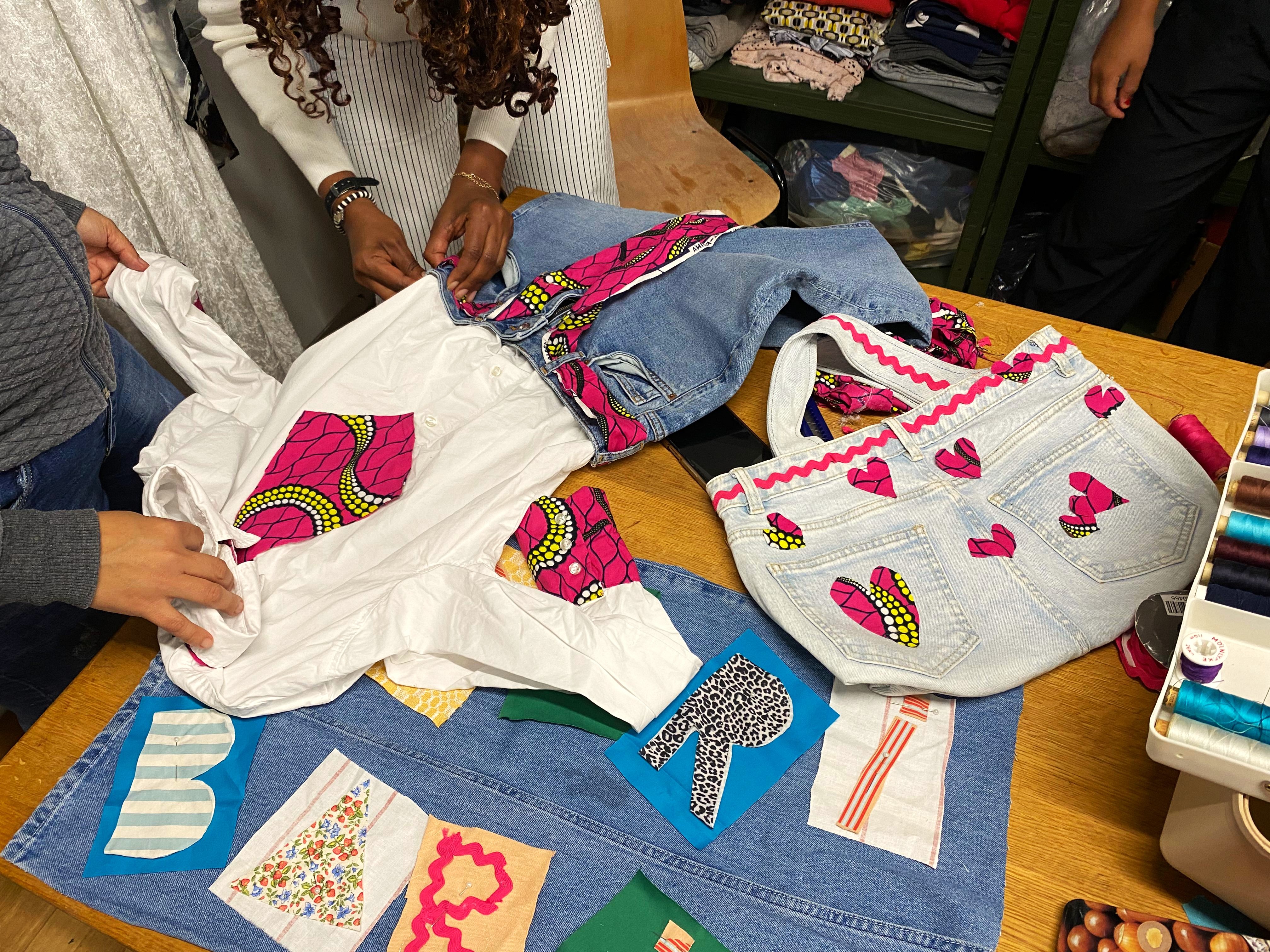
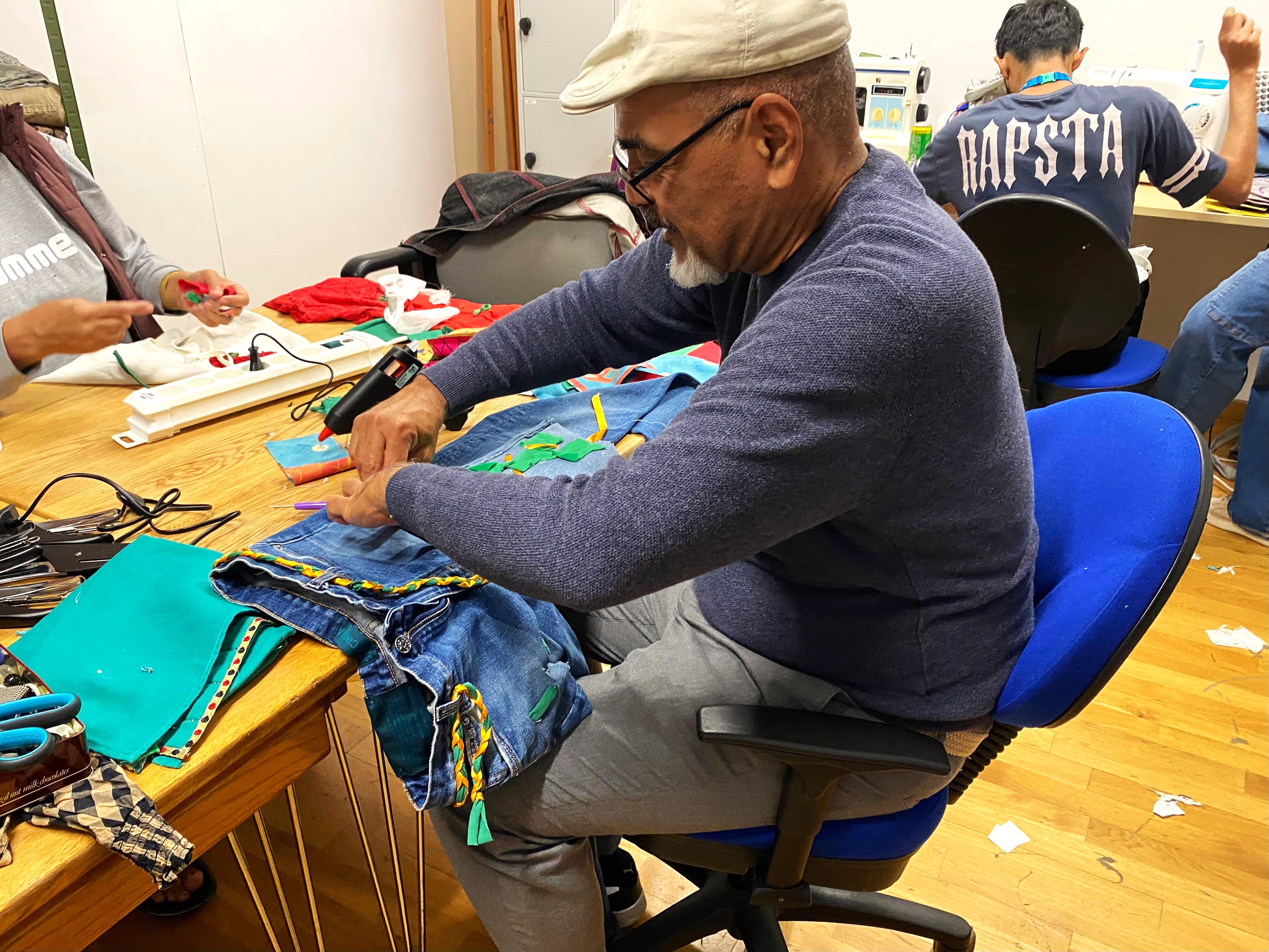
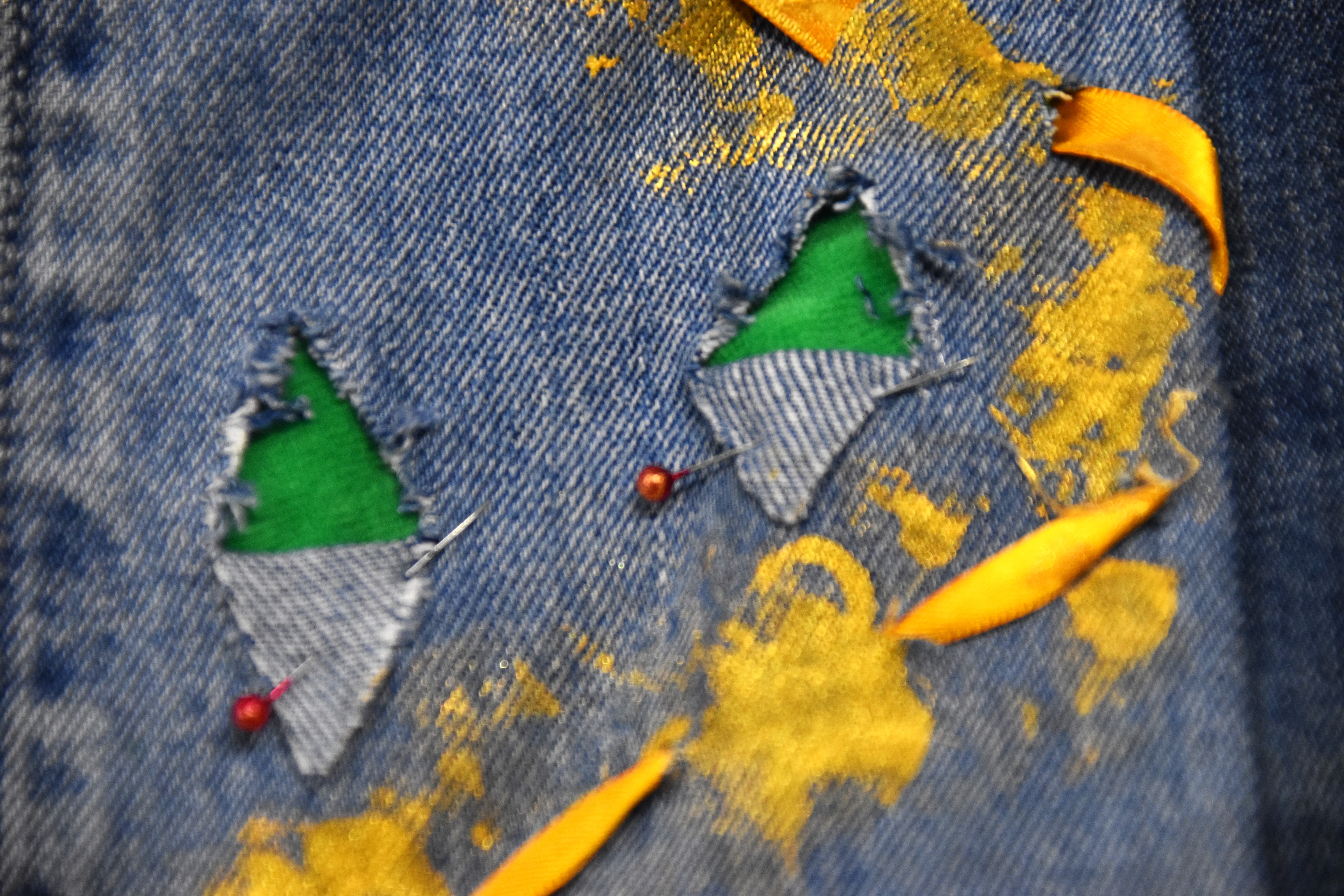
Bari-Bari, a resident-led textile workshop in Holstebro dedicated to repair, clothing renewal, and the creative reuse of materials. Rooted in global conversations about sustainability, Bari-Bari connects the challenges of textile waste with indigenous repair traditions from the Global South. With a long and skilled background in dressmaking, Maro now channels his expertise into building spaces for collective making, resource sharing, and artistic collaboration — where mending becomes both a creative act and a social practice.
Alberto Maro is a textile and fashion designer with a long career in dressmaking, artist collaborations and organising collective labour. He is the founder of the textile workshop Bari-Bari working with textiles and sustainability in relation to the global climate crisis and narratives from the Global South. His projects explore new ways of creating community and resource sharing in artistic and activist contexts.
Bari Bari is part of a collaborative programme between Vesthimmerland Refugee Centres and lím collective, focusing on developing cultural initiatives with residents and artists that centre on care and creative community building. Kindly supported by Augustinus Foundation, Holstebro Kommune, and Færch Fonden. Photos: Clara Viltoft.